
You are using an out of date browser. It may not display this or other websites correctly.
You should upgrade or use an alternative browser.
You should upgrade or use an alternative browser.
7mm Mickoo's Commercial Workbench
- Thread starter mickoo
- Start date


mickoo
Western Thunderer
Thank you.Hi Mick,
great work as usual, would a permanent marker do for the rims?
cheers
Mike
Well yes and no, the ones I have here (sharpies) leave a slight purple sheen so they stand out as much as the little flecks of bright metal and infuriatingly they can rub off too, it's almost like they have teflon impregnated in them.
They're great for running as the treads don't seem to get dirty as easily.
mickoo
Western Thunderer
Cheers,Hi Mick, going back up to Spitfire, wow right up my alley that, simply superb as others have commented.
Wish it had my address on the box!
Shop door is always open


AdeMoore
Western Thunderer
A little over gauge for my layouts! and I’d probably need to come up on the lottery! But all the same terrific and I trust your order book extends somewhere distant into 2026.Cheers,
Shop door is always open
mickoo
Western Thunderer
No problems and orders are good thank you.A little over gauge for my layouts! and I’d probably need to come up on the lottery! But all the same terrific and I trust your order book extends somewhere distant into 2026.

Dog Star
Western Thunderer
The appearance of the wheels suggest that they were produced for MOK... the consensus of those who have locos fitted with MOK wheels - that is S7 group peeps that you and I know - is that the rims are stainless steel and do not blacken easily.I've no idea what the rims are made off but they won't blacken and are a devil to get paint to stick...
Rgds, Graham
mickoo
Western Thunderer
That would make sense.The appearance of the wheels suggest that they were produced for MOK... the consensus of those who have locos fitted with MOK wheels - that is S7 group peeps that you and I know - is that the rims are stainless steel and do not blacken easily.
Rgds, Graham


mickoo
Western Thunderer
Normal as I've been led to believe stainless blackener is akin to snake oil, the only effective way being to heat the material and drop in oil.Are you using stainless blackener or normal blackener?
Obviously being rim insulated that's not going to be a viable option.
I tried Sharpies and it basically just rubbed off as well.My MOK 9F wheels were treated with a brown and black covering from some Sharpies. Enough to take the laser shine away.
mickoo
Western Thunderer
Finally got back to the N class this week, I'm just building up the basic shapes right now and making sure everything is where it should be.
The cylinders need a little tweak as they're a tad nose heavy right now, a 5 thou packer under the front fixing will resolve that.

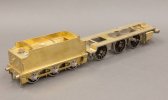
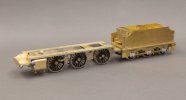
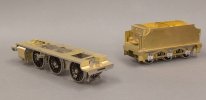
The cylinders need a little tweak as they're a tad nose heavy right now, a 5 thou packer under the front fixing will resolve that.

simond
Western Thunderer
Mick,
this seems to be a potential solution (sorry, bad pun) but I’m always a bit skeptical when there’s no obviously available MSDS.
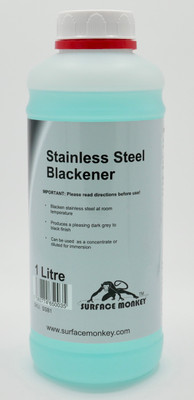
not cheap, either. Then again, a litre would do a few locos, I guess..l
This confirms your suggestion that hot (and acid) is necessary
 www.klscladmetal.com
as does Wikipedia which states
Hot black oxide for stainless steel is a mixture of caustic, oxidizing, and sulfur salts. It blackens 300 and 400 series and the precipitation-hardened 17-4 PH stainless steel alloys.
however, it goes on to note
Room-temperature blackening for stainless steel occurs by auto-catalytic reaction of copper-selenide depositing on the stainless-steel surface. It offers less abrasion resistance and the same corrosion protection as the hot blackening process.
it would appear that there are cold blacks for stainless available. How toxic they might be is a consideration.
best
Simon
this seems to be a potential solution (sorry, bad pun) but I’m always a bit skeptical when there’s no obviously available MSDS.

not cheap, either. Then again, a litre would do a few locos, I guess..l
This confirms your suggestion that hot (and acid) is necessary
How to Permanently Color Stainless Steel
Chemical coloring is one of the oldest methods for coloring stainless steel. This technique involves dipping the stainless steel into a chemical solution that interacts with the metal's passive film, causing it to grow and produce different colors.
as does Wikipedia which states
Hot black oxide for stainless steel is a mixture of caustic, oxidizing, and sulfur salts. It blackens 300 and 400 series and the precipitation-hardened 17-4 PH stainless steel alloys.
however, it goes on to note
Room-temperature blackening for stainless steel occurs by auto-catalytic reaction of copper-selenide depositing on the stainless-steel surface. It offers less abrasion resistance and the same corrosion protection as the hot blackening process.
it would appear that there are cold blacks for stainless available. How toxic they might be is a consideration.
best
Simon
There are definitely cold blacks that work- It helps if you first activate the surface by wiping with hydrocloric acid on a cotton bud or similar.
This one is in Australia but the same US company supplying that one in Simon's link above.
Cheers
Piet
This one is in Australia but the same US company supplying that one in Simon's link above.
Stainless Steel Blackener SSB370 Small 500mL | Caswell Australia
Stainless Steel Blackener SSB370 Small 500mL | Caswell Australia
www.caswellplating.com.au
Cheers
Piet
Last edited:
mickoo
Western Thunderer
Yesterday I hand delivered this to the client; we were talking about build schedules for future work and he said this had been over a year, to me it was only yesterday as you get so immersed in the bench day in and day out, it can all become a bit of a blurr.
So for all of you who have waited or are waiting, thank you for your patience and merry Xmas to all.

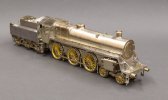
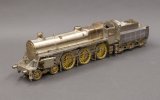
So for all of you who have waited or are waiting, thank you for your patience and merry Xmas to all.

spikey faz
Western Thunderer
Nice!Yesterday I hand delivered this to the client; we were talking about build schedules for future work and he said this had been over a year, to me it was only yesterday as you get so immersed in the bench day in and day out, it can all become a bit of a blurr.
So for all of you who have waited or are waiting, thank you for your patience and merry Xmas to all.
View attachment 253619
View attachment 253620
View attachment 253621
Have a great Christmas Mickoo.

Mike
ps Have you ever built the MOK Bulleid Q1? I have one in the cupboard, but lacking a bit of incentive to build it.
mickoo
Western Thunderer
Thank you and hope you have a good one too.Nice!
Have a great Christmas Mickoo.
Mike
ps Have you ever built the MOK Bulleid Q1? I have one in the cupboard, but lacking a bit of incentive to build it.
I haven't built one myself but I have two here to work on, one to fit DCC to and another for remedial works, the smokebox door casting has some pitting so we're going to replace it with a 3D one. We're (myself/client - acting on his and others behalf) also going to look at working up a new 3D boiler base to go under the casing as there's quite a big hole up under there, possibly firebox throat plate and ash pan front and smokebox/cylinder block rear face as well.

dibateg
Western Thunderer
Mike @spikey faz
I built the Q1 for a client back in 2017, it was an enjoyable build and I added inside working motion. Like all MOK kits it went together very well:-
7mm - The Derby Line - Rolling Stock
Apologies for the hijack Mick.
Have a great Xmas!
Tony
I built the Q1 for a client back in 2017, it was an enjoyable build and I added inside working motion. Like all MOK kits it went together very well:-
7mm - The Derby Line - Rolling Stock
Apologies for the hijack Mick.
Have a great Xmas!
Tony