
You are using an out of date browser. It may not display this or other websites correctly.
You should upgrade or use an alternative browser.
You should upgrade or use an alternative browser.
7mm Manning Wardle Old Class i: a self-designed 'kit'
- Thread starter John Baker
- Start date

Marc Dobson
Western Thunderer
Very nice. Just a shame I now model in P4.
Marc
Marc

spikey faz
Western Thunderer
Hi JohnCurrently Slaters do a set of Manning Wardle pattern wheels that are the correct size - I used them on version 3 above. I intend producing some myself - just developing a boss to fit onto slaters axles, and a jig to keep everything in line and concentric. They should be available in the next couple of months
Your kit looks so very tempting!
I see that you are looking to produce your own wheels for this. As I (try to) model to Scaleseven standards I was wondering if your wheels would be suitable for Scaleseven?All the best
Mike

John Baker
Western Thunderer
Now you're leading me down a rabbit hole! Currently, the only tyres I have are for fine scale, but I could produce some for scale 7. The kit only has chassis parts for fine scale though.....Hi John
Your kit looks so very tempting!
All the best
Mike
Marc Dobson
Western Thunderer
Plenty of NSW examples to build.Hi John
Your kit looks so very tempting!
All the best
Mike
When I built mine all those years ago now (35) it never ocurrred to me that one day a bespoke kit for them would be available. Well done, absolutely brilliant.
It’s interesting to see that a HL gearbox and motor are suggested as the power plant. When first done mine used a home brew 80-1 job mated to a TA12 16x30 can but a revision to DCC sound has seen a HL 60-1 roadrunner + used instead.
Bob
It’s interesting to see that a HL gearbox and motor are suggested as the power plant. When first done mine used a home brew 80-1 job mated to a TA12 16x30 can but a revision to DCC sound has seen a HL 60-1 roadrunner + used instead.
Bob

RichardG
Western Thunderer
I have read the instructions for the chassis assembly and parts of the body, and asked AI to give me a summary of the whole booklet. The summary reads remarkably well so I've pasted it in below. The prototype is perfect for my layout project, where I have two other MWs. So this can be my project for next autumn/winter
. .
The document is a detailed assembly guide for a model kit of the Manning Wardle Old Class I 0-6-0 locomotive, including historical context, specifications, and construction instructions.
General Arrangement Drawing and Specifications
This section provides detailed dimensions and specifications for the Manning Wardle Old Class I 0-6-0 locomotive model.
This section offers essential advice and materials needed for constructing the locomotive model.
This section outlines the step-by-step process for constructing the chassis of the locomotive.
This section details the assembly process for the locomotive body components.
This section covers the final assembly steps and detailing of the locomotive model.
The tank assembly involves detailed steps for constructing and installing the tank onto the model locomotive.
The weatherboard and roof assembly includes optional steps for enhancing the model's appearance.
The buffer assembly involves preparing and securing the buffer heads for functional movement.
This section covers the installation of various detailing parts to enhance the model's realism.
The cab floor installation focuses on preserving wood grain and adding final details.
. .
The document is a detailed assembly guide for a model kit of the Manning Wardle Old Class I 0-6-0 locomotive, including historical context, specifications, and construction instructions.
General Arrangement Drawing and Specifications
This section provides detailed dimensions and specifications for the Manning Wardle Old Class I 0-6-0 locomotive model.
- The drawing is produced to a 7mm scale and should not be used for precise measurements.
- Standard class dimensions include:
- Cylinders: 11in. x 17in. or 12in. x 17in.
- Wheel Diameter: 3ft 1½in.
- Wheelbase: 5ft 5in. + 4ft 10in.
- Boiler Diameter: 2ft 9in.
- Length: 7ft 3in.
- Total Heating Surface: 345ft².
- Water Tank Capacity: 420 Gallons.
- Length Over Buffer Beams: 18ft 6in.
- Height: 9ft 9in.
- Weight: 15T (empty) and 16T (loaded).
This section offers essential advice and materials needed for constructing the locomotive model.
- Read instructions thoroughly before starting the build.
- Use nickel silver (0.4mm) and brass (0.3mm) etched frets, which may require cleaning and filing for a perfect fit.
- Clean all metal parts before soldering to ensure strong joints.
- Recommended solder is 145o, but personal preferences may vary.
- Use a jig for chassis construction to ensure square frames for smooth running.
- The kit requires additional components: wheels, motor, and gearbox.
This section outlines the step-by-step process for constructing the chassis of the locomotive.
- Coupling rods are made by laminating three layers and can be articulated or fixed.
- Motion bracket assembly requires careful handling to avoid bending.
- Ashpan and cylinder heads must be prepared and soldered correctly for proper alignment.
- The chassis must be assembled squarely, with specific attention to frame spacers and supports.
- Brake blocks and mechanisms are detailed, emphasizing the importance of correct positioning for functionality.
This section details the assembly process for the locomotive body components.
- Splasher sides and trims must be carefully handled to avoid distortion.
- Buffer beams are constructed from multiple layers, including a wooden middle section.
- Valances and retaining nuts are added to the footplate for structural integrity.
- The bunker and flare require precise shaping and soldering for a proper fit.
- The firebox and smokebox assembly includes specific castings and requires careful alignment.
This section covers the final assembly steps and detailing of the locomotive model.
- Cab sides are shaped and attached, with handrails added for realism.
- Ensure all components are securely soldered and aligned for a sturdy build.
- Additional detailing includes adding rivets and other small components to enhance authenticity.
- The assembly process emphasizes the importance of precision and attention to detail for a successful model.
The tank assembly involves detailed steps for constructing and installing the tank onto the model locomotive.
- Punch out rivets along the tank's sides and top, and pre-form the curve on the top face.
- Solder the inside former halfway down the tank and fold the sides down to attach to the former.
- Ensure the tank fits well between the smokebox and firebox, soldering the boiler tube to the tank from below.
- Add fixtures such as the filler cap, injectors, and clack valves, ensuring proper alignment and fit.
The weatherboard and roof assembly includes optional steps for enhancing the model's appearance.
- Solder spectacle plate rims to the weatherboard and attach it vertically to the firebox.
- Identify the inside and outside of the cab roof, ensuring correct placement and soldering of retaining straps.
- Form the roof to fit the model, using a 7mm radius for bends, and attach support brackets.
- It is recommended to epoxy the roof after painting and weathering the model.
The buffer assembly involves preparing and securing the buffer heads for functional movement.
- Open out the 0.7mm holes in the buffer housing and insert springs cut in half.
- Secure buffer heads with 0.7mm wire, ensuring they can push in and out with spring action.
- The assembly should allow minimal side movement while maintaining a firm hold.
This section covers the installation of various detailing parts to enhance the model's realism.
- Assemble sandboxes and attach them to the footplate, ensuring proper placement.
- Create and install the reverser reach rod and draincock reach rod, using 0.45mm wire for connections.
- Construct cab steps from multiple parts for added detail and strength.
- Position suspension springs at the back edge of the splashers for realism.
The cab floor installation focuses on preserving wood grain and adding final details.
- Cut and attach oak veneer strips to the cab floor, ensuring they are perpendicular to the direction of travel.
- Use brown washes or wood stain for painting, allowing the grain to show through.
- Attach the handbrake stanchion and reverser lever to complete the cab detailing.
spikey faz
Western Thunderer
Richard : Stop tempting me to buy one!I have read the instructions for the chassis assembly and parts of the body, and asked AI to give me a summary of the whole booklet. The summary reads remarkably well so I've pasted it in below. The prototype is perfect for my layout project, where I have two other MWs. So this can be my project for next autumn/winter
. .
The document is a detailed assembly guide for a model kit of the Manning Wardle Old Class I 0-6-0 locomotive, including historical context, specifications, and construction instructions.
General Arrangement Drawing and Specifications
This section provides detailed dimensions and specifications for the Manning Wardle Old Class I 0-6-0 locomotive model.
Construction Advice and Materials
- The drawing is produced to a 7mm scale and should not be used for precise measurements.
- Standard class dimensions include:
- Cylinders: 11in. x 17in. or 12in. x 17in.
- Wheel Diameter: 3ft 1½in.
- Wheelbase: 5ft 5in. + 4ft 10in.
- Boiler Diameter: 2ft 9in.
- Length: 7ft 3in.
- Total Heating Surface: 345ft².
- Water Tank Capacity: 420 Gallons.
- Length Over Buffer Beams: 18ft 6in.
- Height: 9ft 9in.
- Weight: 15T (empty) and 16T (loaded).
This section offers essential advice and materials needed for constructing the locomotive model.
Chassis Construction Steps
- Read instructions thoroughly before starting the build.
- Use nickel silver (0.4mm) and brass (0.3mm) etched frets, which may require cleaning and filing for a perfect fit.
- Clean all metal parts before soldering to ensure strong joints.
- Recommended solder is 145o, but personal preferences may vary.
- Use a jig for chassis construction to ensure square frames for smooth running.
- The kit requires additional components: wheels, motor, and gearbox.
This section outlines the step-by-step process for constructing the chassis of the locomotive.
Loco Body Assembly Instructions
- Coupling rods are made by laminating three layers and can be articulated or fixed.
- Motion bracket assembly requires careful handling to avoid bending.
- Ashpan and cylinder heads must be prepared and soldered correctly for proper alignment.
- The chassis must be assembled squarely, with specific attention to frame spacers and supports.
- Brake blocks and mechanisms are detailed, emphasizing the importance of correct positioning for functionality.
This section details the assembly process for the locomotive body components.
Final Assembly and Detailing
- Splasher sides and trims must be carefully handled to avoid distortion.
- Buffer beams are constructed from multiple layers, including a wooden middle section.
- Valances and retaining nuts are added to the footplate for structural integrity.
- The bunker and flare require precise shaping and soldering for a proper fit.
- The firebox and smokebox assembly includes specific castings and requires careful alignment.
This section covers the final assembly steps and detailing of the locomotive model.
Tank Construction and Installation Process
- Cab sides are shaped and attached, with handrails added for realism.
- Ensure all components are securely soldered and aligned for a sturdy build.
- Additional detailing includes adding rivets and other small components to enhance authenticity.
- The assembly process emphasizes the importance of precision and attention to detail for a successful model.
The tank assembly involves detailed steps for constructing and installing the tank onto the model locomotive.
Weatherboard and Roof Assembly Instructions
- Punch out rivets along the tank's sides and top, and pre-form the curve on the top face.
- Solder the inside former halfway down the tank and fold the sides down to attach to the former.
- Ensure the tank fits well between the smokebox and firebox, soldering the boiler tube to the tank from below.
- Add fixtures such as the filler cap, injectors, and clack valves, ensuring proper alignment and fit.
The weatherboard and roof assembly includes optional steps for enhancing the model's appearance.
Buffer Assembly and Functionality
- Solder spectacle plate rims to the weatherboard and attach it vertically to the firebox.
- Identify the inside and outside of the cab roof, ensuring correct placement and soldering of retaining straps.
- Form the roof to fit the model, using a 7mm radius for bends, and attach support brackets.
- It is recommended to epoxy the roof after painting and weathering the model.
The buffer assembly involves preparing and securing the buffer heads for functional movement.
Detailing and Miscellaneous Parts Installation
- Open out the 0.7mm holes in the buffer housing and insert springs cut in half.
- Secure buffer heads with 0.7mm wire, ensuring they can push in and out with spring action.
- The assembly should allow minimal side movement while maintaining a firm hold.
This section covers the installation of various detailing parts to enhance the model's realism.
Cab Floor and Final Touches
- Assemble sandboxes and attach them to the footplate, ensuring proper placement.
- Create and install the reverser reach rod and draincock reach rod, using 0.45mm wire for connections.
- Construct cab steps from multiple parts for added detail and strength.
- Position suspension springs at the back edge of the splashers for realism.
The cab floor installation focuses on preserving wood grain and adding final details.
- Cut and attach oak veneer strips to the cab floor, ensuring they are perpendicular to the direction of travel.
- Use brown washes or wood stain for painting, allowing the grain to show through.
- Attach the handbrake stanchion and reverser lever to complete the cab detailing.
Mike
John Baker
Western Thunderer
I never thought of getting AI to read through it for me! Gives a nice generalised overview of the 25 or so pages of text & photosI have read the instructions for the chassis assembly and parts of the body, and asked AI to give me a summary of the whole booklet. The summary reads remarkably well so I've pasted it in below. The prototype is perfect for my layout project, where I have two other MWs. So this can be my project for next autumn/winter
. .
The document is a detailed assembly guide for a model kit of the Manning Wardle Old Class I 0-6-0 locomotive, including historical context, specifications, and construction instructions.
General Arrangement Drawing and Specifications
This section provides detailed dimensions and specifications for the Manning Wardle Old Class I 0-6-0 locomotive model.
Construction Advice and Materials
- The drawing is produced to a 7mm scale and should not be used for precise measurements.
- Standard class dimensions include:
- Cylinders: 11in. x 17in. or 12in. x 17in.
- Wheel Diameter: 3ft 1½in.
- Wheelbase: 5ft 5in. + 4ft 10in.
- Boiler Diameter: 2ft 9in.
- Length: 7ft 3in.
- Total Heating Surface: 345ft².
- Water Tank Capacity: 420 Gallons.
- Length Over Buffer Beams: 18ft 6in.
- Height: 9ft 9in.
- Weight: 15T (empty) and 16T (loaded).
This section offers essential advice and materials needed for constructing the locomotive model.
Chassis Construction Steps
- Read instructions thoroughly before starting the build.
- Use nickel silver (0.4mm) and brass (0.3mm) etched frets, which may require cleaning and filing for a perfect fit.
- Clean all metal parts before soldering to ensure strong joints.
- Recommended solder is 145o, but personal preferences may vary.
- Use a jig for chassis construction to ensure square frames for smooth running.
- The kit requires additional components: wheels, motor, and gearbox.
This section outlines the step-by-step process for constructing the chassis of the locomotive.
Loco Body Assembly Instructions
- Coupling rods are made by laminating three layers and can be articulated or fixed.
- Motion bracket assembly requires careful handling to avoid bending.
- Ashpan and cylinder heads must be prepared and soldered correctly for proper alignment.
- The chassis must be assembled squarely, with specific attention to frame spacers and supports.
- Brake blocks and mechanisms are detailed, emphasizing the importance of correct positioning for functionality.
This section details the assembly process for the locomotive body components.
Final Assembly and Detailing
- Splasher sides and trims must be carefully handled to avoid distortion.
- Buffer beams are constructed from multiple layers, including a wooden middle section.
- Valances and retaining nuts are added to the footplate for structural integrity.
- The bunker and flare require precise shaping and soldering for a proper fit.
- The firebox and smokebox assembly includes specific castings and requires careful alignment.
This section covers the final assembly steps and detailing of the locomotive model.
Tank Construction and Installation Process
- Cab sides are shaped and attached, with handrails added for realism.
- Ensure all components are securely soldered and aligned for a sturdy build.
- Additional detailing includes adding rivets and other small components to enhance authenticity.
- The assembly process emphasizes the importance of precision and attention to detail for a successful model.
The tank assembly involves detailed steps for constructing and installing the tank onto the model locomotive.
Weatherboard and Roof Assembly Instructions
- Punch out rivets along the tank's sides and top, and pre-form the curve on the top face.
- Solder the inside former halfway down the tank and fold the sides down to attach to the former.
- Ensure the tank fits well between the smokebox and firebox, soldering the boiler tube to the tank from below.
- Add fixtures such as the filler cap, injectors, and clack valves, ensuring proper alignment and fit.
The weatherboard and roof assembly includes optional steps for enhancing the model's appearance.
Buffer Assembly and Functionality
- Solder spectacle plate rims to the weatherboard and attach it vertically to the firebox.
- Identify the inside and outside of the cab roof, ensuring correct placement and soldering of retaining straps.
- Form the roof to fit the model, using a 7mm radius for bends, and attach support brackets.
- It is recommended to epoxy the roof after painting and weathering the model.
The buffer assembly involves preparing and securing the buffer heads for functional movement.
Detailing and Miscellaneous Parts Installation
- Open out the 0.7mm holes in the buffer housing and insert springs cut in half.
- Secure buffer heads with 0.7mm wire, ensuring they can push in and out with spring action.
- The assembly should allow minimal side movement while maintaining a firm hold.
This section covers the installation of various detailing parts to enhance the model's realism.
Cab Floor and Final Touches
- Assemble sandboxes and attach them to the footplate, ensuring proper placement.
- Create and install the reverser reach rod and draincock reach rod, using 0.45mm wire for connections.
- Construct cab steps from multiple parts for added detail and strength.
- Position suspension springs at the back edge of the splashers for realism.
The cab floor installation focuses on preserving wood grain and adding final details.
- Cut and attach oak veneer strips to the cab floor, ensuring they are perpendicular to the direction of travel.
- Use brown washes or wood stain for painting, allowing the grain to show through.
- Attach the handbrake stanchion and reverser lever to complete the cab detailing.
I was going to say it's a shame AI can't build it as well, although that would spoil the fun....
RichardG
Western Thunderer
Richard : Stop tempting me to buy one!
Mike
Well, the web site says there are nine kits available. That's one fewer than it said ten minutes ago. Just saying . . .

Osgood
Western Thunderer
That never stopped Larry.Very nice. Just a shame I now model in P4.
Marc


Overseer
Western Thunderer
I think only two. Manning Wardle engine numbers 32 and 72 were ordered by contractors working in NSW and were standard Old Class I. The Old Class I locos ordered by the NSW government had longer boilers (7'9" instead of 7'3") which meant a longer wheelbase. They had 11" cylinders but for modelling purposes starting with a Class K (12" cylinders and the 7'9" boiler) would be more accurate.Plenty of NSW examples to build.
RichardG
Western Thunderer

I want to keep the etches wrapped up until I start the build, but in the meantime here is a photo of the other parts in the kit.
All of the castings are in brass, and there are pieces of wood and veneer to make the buffer beams and footplate. Each piece of wire is labelled, as are the bags containing the small parts. The instruction book is printed in colour throughout.
The kit arrived beautifully packed, in a good cardbord box with this enclosed inside a fitted outer transit box. The packaging looked good enough for shipping worldwide e.g. Australia @Overseer if wanted.
So - so far, I am very pleased with my purchase. An excellent first impression
spikey faz
Western Thunderer
I have caved in to temptation and ordered the kit.
Mike
Mike
spikey faz
Western Thunderer
Manning Wardle did produce some crane locos, but nothing (as far as I'm aware) that utilised anything that looked like an old I class. So, Western Thunder is spared the gruesome process of such a conversion!Where will the crane go?

Mike
Overseer
Western Thunderer
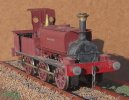
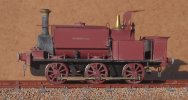
Thanks for the heads up but I don't think I am in the market at the moment. I do like Manning Wardles though, this is Works No. 616, Class K 'Huddersfield' as operated on the Brill Tramway, built in S7 from the Impetus kit back in the 1990s. Bob Essery told me every time he saw the loco that it wasn't a proper colour for a Manning Wardle and that it should be green, so seeing John has painted one of his a similar colour made me smile. It was built as a back up engine for exhibitions and runs very nicely on simple beam compensation. I should have pushed the left side brake blocks back into their proper position for the photo.good enough for shipping worldwide e.g. Australia @Overseer if wanted.
John Baker
Western Thunderer
Out of the three that I built of mine, the green was my least favourite colour - not sure why as I like a dark green, but it just didn't look 'right' (not sure what right is ) on the loco. The blue is probably my favourite, yet that was a Caledonian blue before weathering, and probably very unlikely to have been used on a Manning Wardle anywhere I would think!Thanks for the heads up but I don't think I am in the market at the moment. I do like Manning Wardles though, this is Works No. 616, Class K 'Huddersfield' as operated on the Brill Tramway, built in S7 from the Impetus kit back in the 1990s. Bob Essery told me every time he saw the loco that it wasn't a proper colour for a Manning Wardle and that it should be green, so seeing John has painted one of his a similar colour made me smile. It was built as a back up engine for exhibitions and runs very nicely on simple beam compensation. I should have pushed the left side brake blocks back into their proper position for the photo.
View attachment 245317
View attachment 245316

AJC
Western Thunderer
Out of the three that I built of mine, the green was my least favourite colour - not sure why as I like a dark green, but it just didn't look 'right' (not sure what right is ) on the loco. The blue is probably my favourite, yet that was a Caledonian blue before weathering, and probably very unlikely to have been used on a Manning Wardle anywhere I would think!
Ok, late in life, but sky blue with a white stripe along the tank:

Manning Wardle Works No 641 No 4 Sharpthorn 0-6-0ST
This locomotive was built by Manning and Wardle & Company in 1877 and has the characteristic bent-over sheet cab roof, and side sheets forming little verandahs each side. One interesting featur…
 preservedbritishsteamlocomotives.com
I think all these things look better lined: most started out that way and many lived out their entire lives with lined finishes. This is completely subjective, I admit. But I'm not in the market for a large scale Manning, Wardle, either!
Adam