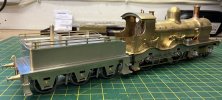
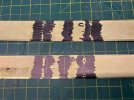
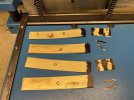
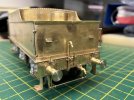
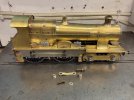
It’s strange how things fall into place, as in my last post I said that the next bit of the build was to scratch build the Dean 2000 gal tender, having obtained the drawings and as many photo that are available. Simon Thompson kindly offered the opportunity to test build the forthcoming Finney7 2000 gallon tender.
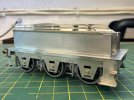
Looking at the kit when it arrived it’s clear that quite a few design changes have been made from the original Martin Finney tenders. All the etches are Nickel Silver which is a good move, inside bearings on the wheels and the skin in three sections, a selection of lost wax and resin castings. For me the inside bearings was what I was going to build into my model, but with this on the kit doing away with the outside bearings and removable side frames it makes the assembly much simpler.
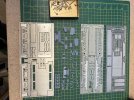
I’ve assembled the kit following the instructions as that’s part of the test, but have deviated in places to suit my personal preference, these I will indicate as the build processes. I would say that as this is a test build things could be different on the kit when released.
One change I’m making is to model the earlier coal rail variant, so this will involve making them parts as the kit is based on the coal fender type.
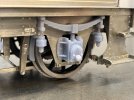
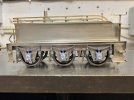
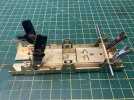
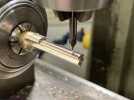
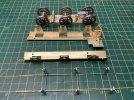
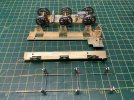
Starting with the well tank and frames, the rear axle is fix with the front two using beam suspension, the design uses 3/16” axles but as my wheels have 5/32” I machined some inserts to going into the bearings supplied, plus some tubes with an outside diameter of 3/16” to fit onto the axles on the beam. The wheels used are temporary as this model will have the early wooden insert type fitted a bit latter.
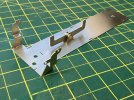
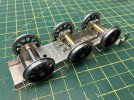
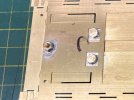
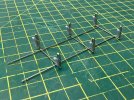
As the brake rigging is removable 14ba bolts have been added and soldered into the frames, the kit is designed with these fixed.
On the brake hangers I’ve added some packing bushes to space them which allows no damage when removing the whole assembly from the frames.
The resin brake shoes fit neatly between the hangers and are free to move allowing a more prototype apperance. Once assembled with the pull rods these sits into the linkage on the cross shaft, held in place with some push fit wire pins.

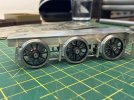
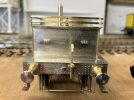
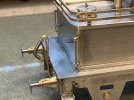
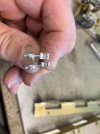
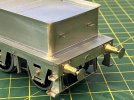
On the running plate I added some brass bushes to locate the axle boxes and fitted my own buffers.


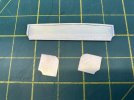
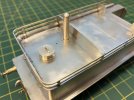
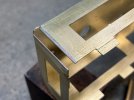
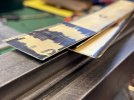
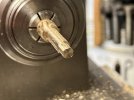
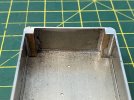
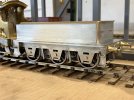
The tank body is based around an inner frame, top plate ,three skin sections and the resin corners, with frame soldered to the running plate and all the other bits added afterwards, I’ve changed assembling the frame and skins off the running plate as I’ve added brass corners which have been machined following the design and size of the resin version, again this is to my own preference, the resin ones fit. Having the skin in three sections makes forming the curves much easier, from the single piece skins on the older kits.
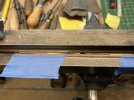
I used a small folding press to form the curves, care being taken as these a quite thin especially around the drop section with the beading, some packing card the same thickness of the beading on the skin prevented any distortion when forming curve.


Simon