Morning, Richard,
I’m not really sure what a lumen looks like, and whilst I understand all the words, I’m not sure Wikipedia is a whole lot of use either.

en.wikipedia.org
en.wikipedia.org
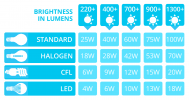
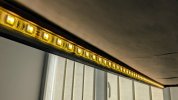
if the output of the led strip is 700 lumens per metre, presumably that is per metre of length, and the light is evenly spread over the semicylinder on the lit side of the strip.
if your led strip is 0.65m from the layout, which is 400mm wide.
At that distance the semicylinder area would be 0.65 pi =~ 2m^2 per metre length
average illuminance would therefore be 700/2 = 350 lux.
I’ve no idea what that looks like either.
I guess there is a way, get an illuminance meter, and then with the curtains open on a sunny day, and with the room lights off at night, and various levels in between, measure at various brightness settings of your dimmer control, and see what seems about right, and then make a note of the settings depending on the ambient light. Lux meters are available from Amazon for just shy of £30, but there is at least half a dozen free iPhone apps, and I guess also for Android.
You could also use a camera light meter, but bearing in mind that the 350lux would only be reflected by the 0.4m depth of your baseboard, plus your backscene height. The rest of the light would be lost, illuminating your legs etc.
Presumably there is a range of brightness from “too dull to see the detail” to “west end theatrical overload”, and presumably there is a range of acceptability which will be very much dependent on the viewer, I know my vision improved when I had my cataract op, but it had been declining slowly from my youth anyway. I certainly need brighter modelling lights now than even five years ago.
I can foresee roving WTers sneaking up to exhibition layouts and measuring their brightness…
atb
Simon