
You are using an out of date browser. It may not display this or other websites correctly.
You should upgrade or use an alternative browser.
You should upgrade or use an alternative browser.
Traction Engines (and the like...)
- Thread starter Giles
- Start date


RichardG
Western Thunderer
I imagine the Long Shop Museum shop would in fact be the ideal place to acquire such information - a book at the appropriate techy level!
Yes . . a Shire book entitled "Traction Engines" looks just right, and the shop at the museum is sending me a copy by mail order


AndyB
Western Thunderer
I think you'll need a variety of books to cover such a range of questions. I would say there are 4 main categories: There are a lot of general 'picture books' around, which generally don't get too technical. Then there are works on the various makers - Burrell, Fowler, Garrett, etc - get to lots of technical detail, but don't talk about operation much. A third set are the more biographical ones, which do talk more about how the engines were used, crewed, etc. Finally there are some works on specific types of engines such as waggons (overtype and undertype, tractors, etc).I wonder, is there a "beginners guide to traction engines" to be had? I am thinking of a book rather than a web site. There are all these beautiful photographs but I want to understand what I am looking at.
For example, why are engines a mix of left- and right-hand drive? If an engine had room to carry only one person, could they manage the engine alone or did a mate travel separately? How small could an engine be (a working engine not a model)? Why were some flywheels spoked and some solid?
Will try to answer further later. Have a meeting to get to now....
Andy

Tim Watson
Western Thunderer
I would strongly recommend Anthony Coulls (NRM), book:
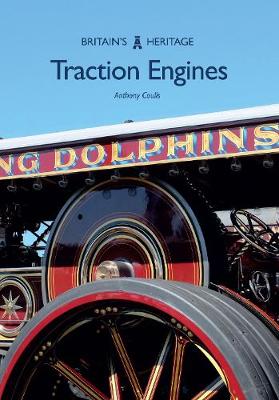
 www.waterstones.com
Traction engines fall into many types and sizes.
Traction engines as such are generally agricultural / rural usage. Primarily used for threshing. By far the simplest form. Usually single cylinder, spoked flywheel, driver on man stand, steersmen on the left. They come in a range of sizes but not massive: 5’8” hind wheel. Some would have a 1/2 - 3/4 roof.
Road locomotives are much taller and bigger, built for moving heavy loads (boilers, transformers) on main roads at speed. Nearly always two cylinder, solid flywheel (so as not to frighten horses) and belly tank. 1/2 cab: 6’-7’ hind wheel. Driver on man stand steersman on the left.
Tractors are a very small sized road loco designed for short-haul operation and one man operation: 3/4 roof. They can be 3/4 size of a RL and are fast & nippy. Solid flywheel with LH drive & belly tank. Could be used on agricultural work. 5’ hind wheel.
Showman’s Road Locos are an extended road loco carrying a dynamo at the front and a full length roof. Used for transporting fairs and generating for rides. Very decorative. 6-7’ hind wheels
Ploughing engines are unique to ground cultivation with a horizontal wire drum under the very long boiler, mostly two cylinder. Built as pairs, would haul cultivator across field by cable and then tow between farms. Dished spoked flywheel. Steersmen on left. 5’9” hind wheels maybe bigger.
Steam rollers are slow moving engines with front end rolls, belly tanks, smooth wheels, plain flywheel. They would normally have RH steersman, often being single - manned. 5’-5’9” hind wheels. They come in a whole range of sizes. Single cylinder possibly more common, often with a 3/4 roof.
Finally, steam wagons are completely different genre.
Hope that helps.
Tim
Traction Engines by Anthony Coulls | Waterstones
Buy Traction Engines by Anthony Coulls from Waterstones today! Click and Collect from your local Waterstones or get FREE UK delivery on orders over £25.
www.waterstones.com
Traction engines fall into many types and sizes.
Traction engines as such are generally agricultural / rural usage. Primarily used for threshing. By far the simplest form. Usually single cylinder, spoked flywheel, driver on man stand, steersmen on the left. They come in a range of sizes but not massive: 5’8” hind wheel. Some would have a 1/2 - 3/4 roof.
Road locomotives are much taller and bigger, built for moving heavy loads (boilers, transformers) on main roads at speed. Nearly always two cylinder, solid flywheel (so as not to frighten horses) and belly tank. 1/2 cab: 6’-7’ hind wheel. Driver on man stand steersman on the left.
Tractors are a very small sized road loco designed for short-haul operation and one man operation: 3/4 roof. They can be 3/4 size of a RL and are fast & nippy. Solid flywheel with LH drive & belly tank. Could be used on agricultural work. 5’ hind wheel.
Showman’s Road Locos are an extended road loco carrying a dynamo at the front and a full length roof. Used for transporting fairs and generating for rides. Very decorative. 6-7’ hind wheels
Ploughing engines are unique to ground cultivation with a horizontal wire drum under the very long boiler, mostly two cylinder. Built as pairs, would haul cultivator across field by cable and then tow between farms. Dished spoked flywheel. Steersmen on left. 5’9” hind wheels maybe bigger.
Steam rollers are slow moving engines with front end rolls, belly tanks, smooth wheels, plain flywheel. They would normally have RH steersman, often being single - manned. 5’-5’9” hind wheels. They come in a whole range of sizes. Single cylinder possibly more common, often with a 3/4 roof.
Finally, steam wagons are completely different genre.
Hope that helps.
Tim
Last edited:
RichardG
Western Thunderer
Yes Tim it helps me a great deal. I have some useful terminology to help me to look in the right places. So if I come to place a traction engine on my layout, it will look plausible for its setting.Hope that helps.
RichardG
Western Thunderer
A simple answer is, "different makers had different ideas as to which side the steering should be situated, right or left".For example, why are engines a mix of left- and right-hand drive?
From A brief history of the Traction Engine
Sometimes, I really do over-think things.

Ian@StEnochs
Western Thunderer
Steersman on left can see the edge of the road which is very important. Driver fires and handles the regulator and reverser.
RichardG
Western Thunderer
Steersman on left can see the edge of the road which is very important. Driver fires and handles the regulator and reverser.
Well this is good to know, because my Fowler engine I have modified to become a wagon load has the steering wheel on the right. Clearly it is for export, which is what I want it to be.
I have since discovered the web site of the Road Locomotive Society. They publish books of photos and I will try one of these. I have done dozens of searches online, and suddenly their site popped up all out of the blue.

Giles
Western Thunderer
Spoked flywheels strangely give a better 'flywheel effect' than a solid flywheel - hence their use on agricultural machines, whose primary purpose is usually to drive other machines such as threshing machines and bailers which require a constant speed (they are usually fitted with governors as well). Conversely at the other end of the scale, Road rollers need to reverse quite smartly, and too much momentum on the flywheel would be problematic - hence solid flywheels, not too large.
Flywheels intended to drive machinery are always crowned in section, not flat. This keeps the belt on, which would otherwise work off a flat flywheel very quickly.
And then one can get into differentials!
Flywheels intended to drive machinery are always crowned in section, not flat. This keeps the belt on, which would otherwise work off a flat flywheel very quickly.
And then one can get into differentials!
John Palmer
Western Thunderer
The Wallis 'Advance' design is optimised for tarmac rolling, where there is a risk of the roller sinking into the soft tarmac if it remains stationary. The 'Advance' is a two-cylinder machine with no flywheel to impart continuing momentum when the throttle is closed. So, when tarmac rolling, you close the throttle and let the engine drift at the end of its run. As you approach a standstill, you shift the reverser to the opposite end of its quadrant then re-open the throttle. The effect is that the engine slows to a halt and immediately sets off in the opposite direction of travel without pause and at no time remains stationary on the soft surface.Road rollers need to reverse quite smartly, and too much momentum on the flywheel would be problematic - hence solid flywheels, not too large.
RichardG
Western Thunderer

Fowler 12 ton single cylinder roller No.7446 of 1895
And yet, Fowler used a spoked flywheel (although it looks like a very lightweight one) on their roller of 1895.
I can see, if I am going to put a traction engine on my layout and avoid raising knowedgeable eyebrows, I need to choose the right sort of traction engine for the task in hand, or at least choose a suitable task for a model I might buy. Fortunately Corgi do a Garrett 4CD, which was England’s most popular tractor in the early 20th century. Corgi claim this to be 1:50 scale, but it measures up around 1:47. So a bit undersize for 7mm scale, but not drastically so.
Example 4CD: Garrett Steam Tractors – The Long Shop Museum

Dave F.
Western Thunderer
The Aveling roller I usually worked on had the steersman on the left and as has been said you can see the edge of the road but I once steered an engine through Glasgow for an open day standing on the right and had to be reminded I was a good bit away from the kerb but at least you didn't get so spotted with oil from a flywheel....
Dave F.
Dave F.

alastairq
Western Thunderer
t and had to be reminded I was a good bit away from the kerb
As a one-time military driver instructor, one of the vehicles I ran courses for was left hand drive...and the driver's seat [and cab, of course] was quite a long way off the ground.
Bearing in mind, the 'students' were , at that point, still novice drivers..even if they did hold C+ E....and I noticed how they tended to wander across the 'centre line' of roads they drove on...think themselves to be 'too near the kerb!'
As an instructor, sat in the right side seat, finding oneself heading straight towards oncoming arics and things certainly focussed one's attention..
With the student driver looking blithely relaxed..
It's an 'optical' thing....the higher up one's eyes are, when sat on the left....the more one's brain tells one that 'we're too near the kerb...
Odd that the same students had no issues driving other, RHD, waggons...