Prototype Tim Mills' Photos

oldravendale

Western Thunderer
Wow, Andy. You are persistent in your searching and I remain very grateful. Thanks again.

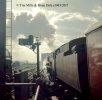
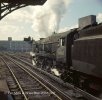
I don’t have a date for this, or indeed an identification of the locos but it’s clearly Bulleid Pacifics at the buffer stops at Waterloo Station, a scene I remember so well.

img549  TM1.  FINAL.  INCREASED CONTRAST AND FILL IN FLASH.  SHADOWS AND MID TONES LIGHTENED F...jpg

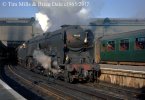
Original West Country 34019 Bideford at Waterloo in the 1960s. The loco was allocated to Salisbury in August/September 1963, then Feltham in August/September 1964 and Eastleigh in November the same year finally going to Nine Elms in June 1966. It was withdrawn in March 1967 (SLS) and was disposed of at Cashmore’s, Newport, in September 1967. (BR Database).

img550  TM2.  34019.  Waterloo.  In the 1960s. - FINAL - Copy (2) copyright Final Resized.jpg

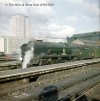
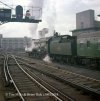
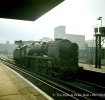
A classic view of an unidentified rebuilt Bulleid Pacific leaving Waterloo in the 1960s with PW men working in the foreground.

img551  TM3.  Rebuilt Bulleid Pacific leaving Waterloo.  PW men in foreground.  In the 1960s. ...jpg

Brian
 

AJC

Western Thunderer
Those Waterloo shots are splendid, lovely light under the roof. The orange vest on the left hand P Way man is a bit surprising, but they were around that early (just). The repeated 'lore' (no references given, but I know a man who'll have them), relates to the first use being a trial around Glasgow in 1964 which gives us a terminus pre quem for the picture: The History of Hi-Vis Clothing

Actual memories from staff relate to the '70s, quoted here: Linesmen in Clapham (1976) - An example of early PPE?

Adam
 

dcordingley

New Member
Those Waterloo shots are splendid, lovely light under the roof. The orange vest on the left hand P Way man is a bit surprising, but they were around that early (just). The repeated 'lore' (no references given, but I know a man who'll have them), relates to the first use being a trial around Glasgow in 1964 which gives us a terminus pre quem for the picture: The History of Hi-Vis Clothing

Actual memories from staff relate to the '70s, quoted here: Linesmen in Clapham (1976) - An example of early PPE?

Adam
Perhaps more surprising - at least in the context of our contemporary health-and-safety culture - is the proximity of the two PW workers to what I presume are live rails. But presumably, at the time, this was just how it was....

David Cordingley
 

AJC

Western Thunderer
Perhaps more surprising - at least in the context of our contemporary health-and-safety culture - is the proximity of the two PW workers to what I presume are live rails. But presumably, at the time, this was just how it was....

David Cordingley

Until quite recently - indeed, it still happens today. I haven't seen teams actually on the track (though lots of people in orange PPE tackling lineside growth), with a look out on live third rail in the last month or two, but it's not that unusual. At the throat of Waterloo? No way.

Adam
 
Last edited:

Overseer

Western Thunderer
Those Waterloo shots are splendid, lovely light under the roof. The orange vest on the left hand P Way man is a bit surprising, but they were around that early (just). The repeated 'lore' (no references given, but I know a man who'll have them), relates to the first use being a trial around Glasgow in 1964 which gives us a terminus pre quem for the picture: The History of Hi-Vis Clothing

Actual memories from staff relate to the '70s, quoted here: Linesmen in Clapham (1976) - An example of early PPE?

Adam
The November 1965 Railway Magazine included a piece saying the London Midland Region had started issuing hi-vis jerkins, as seen in the Waterloo photo, following testing - see here #3
 

oldravendale

Western Thunderer
I'm opening a special file for the photo of the P-way men at Waterloo. There's so much of interest in the comments and the attachments that they'll not fit on a simple attachment to the photo! If I was forced to guess a date for those three photos I'd say 1966 (there are a few photos yet to come which are so dated) which fits rather well. So thank you Adam @AJC , David @dcordingley , and @Overseer .

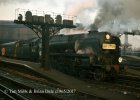
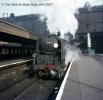
These photos, img552 & 554 go with img408 & 302 in post #5600 so I’m repeating the earlier comments – but now we have a date! Rebuilt Battle of Britain 34056 Croydon at Waterloo and with one of the photos dated March 1966 I believe we can assume both are similarly dated. Looking at allocations after December 1960 when it was rebuilt it was at Exmouth Junction (where it had been since December 1954 in original condition), and moved to Salisbury in November 1963 where it was withdrawn in May 1967. (SLS). There's no shed plate, though, which puts the photo towards the end of steam on the Southern and I'll guess that the photo is dated at some time between 1963 and 1967 – now dated as shown as March 1966. It then went to Cashmore’s, Newport and was broken up during September 1967. (BR Database). The SLS noted it in store at Salisbury in August 1967.

img552  TM4R.  34056.  Rebuilt BB end of platform.  Waterloo.  In the 1960s.  Shadows lifted. ...jpg

img554  TM6R.  34056 leaving Waterloo.  March 1966.  copyright FINAL (3).jpg

Three photos (img555, 770 and 772) of rebuilt (in May 1960) Battle of Britain 34071 601 Squadron at Waterloo with one of them dated as March 1965 so probably all were photographed on the same date. At that time it was allocated to Eastleigh where it was sent in August/September 1964. It was withdrawn in April 1967 (SLS) and went to Cashmore’s, Newport where it was scrapped in September the same year. (BR Database).

img555  TM7R.  34071.  Platform end at Waterloo.  In the 1960s.  copyright FINAL - Copy (2).jpg

img770.  TM.  34071.  Waterloo.  Mid 1960s.  copyright FINAL JPEG Resized.jpg

img772.  TM.  34071.  Waterloo.  Mar 1965.  copyright FINAL JPEG Resized.jpg

Brian
 

2-Bil

Western Thunderer
The Bullieds exhaling wisps of breath at journeys end was a truely evocative, truely inspired composition and straightway resurrected my "back in the day" memories of Waterloo and its loco's insistent scents. The other images are a treat too, so thanks Mr Mills and Brian too.
Brian W
 

Arun Sharma

Western Thunderer
Regarding #5841 - the two Bulleid fwd end sideviews - Is it possible from these two views to determine whether these are MN or WC/BoB?
 

Barry37

Western Thunderer
The November 1965 Railway Magazine included a piece saying the London Midland Region had started issuing hi-vis jerkins, as seen in the Waterloo photo, following testing - see here #3
Looks like the clothing in the photo may be a donkey jacket with an outer orange pvc (or similar) shoulder/upper back and chest part. Building companies also issued them, with the name across the back, e.g. WIMPEY.
I had one with a black PVC outer layer. It kept your shoulders dry, but soaked through where all the rain ran off the bottom edge
 

oldravendale

Western Thunderer
Thanks Brian @Brian @2-Bil for your kind comment. I agree it's a cracking picture and is the first I printed for Tim. It went through five iterations to get the result Tim wanted. I also appreciate the question about the locos in the same photo, Arun @Arun Sharma and the reply by Dave @Dave Holt . That's also a great bit of first hand info, Barry @Barry37 and thanks for that.

Two here (img557 & 771) of rebuilt Battle of Britain 34060, 25 Squadron, at Waterloo in March 1965. The loco was rebuilt in November 1960 and allocated to Nine Elms in October/November 1963 before moving to Eastleigh in August/September 1964 where it was withdrawn at the end of Southern steam in July 1967. (SLS). It was scrapped at Cashmore’s, Newport in May 1968. (BR Database).

img557  TM9.  34060.  Rear three quarter view.  Waterloo.  In the 1960s.  copyright FINAL WITH...jpg

img771.  TM.  34060.  Waterloo.  March 1965. copyright FINAL JPEG.jpg

img559 & 773 are of rebuilt Bulleid West Country 34037, Clovelly at Waterloo in the mid 1960s. It was rebuilt in March 1958. Allocations were Bournemouth in January/February 1961, Eastleigh in September 1962, Nine Elms in June 1966 and back to Eastleigh in April/May 1967 where it was withdrawn at the end of Southern steam in July 1967. (SLS). It was another loco disposed of at Cashmore’s, Newport and the job was completed in March 1968. (BR Database).

img559  TM11.  34037.  Waterloo.  Evening Shot.  In the 1960s.  copyright FINAL WITH ENHANCED ...jpg

img773.  TM.  34037.  Waterloo.  Mid 1960s.  copyright FINAL JPEG Resized.jpg

Rebuilt in December 1957 was West Country 34021 Dartmoor, here at Waterloo on a Greek Line boat train in the 1960s. This was a Bournemouth engine from January/February 1961, then Eastleigh in September 1962 and Nine Elms in December 1964/January 1965 where it was another withdrawn at the end of Southern steam in July 1967. (SLS). Yet again it was disposed of at Cashmore’s, Newport, in March 1968. (BR Database).

img560  TM12R.  34021.  Greek Line Boat Train.  Waterloo.  In the 1960s.  copyright FINAL (2).jpg

Brian
 
Last edited:

oldravendale

Western Thunderer
Thanks for that, Tony @76043 . As you say, sometimes Tim got it really right.

Rebuilt at Eastleigh in January 1958 is West Country 34012 Launceston here leaving Waterloo Station in the 1960s carrying a 70E, Salisbury shed plate . This was a Salisbury engine in August/September 1963 which dates the picture quite well and moved to Bournemouth in October 1965 where it was withdrawn in December 1966. (SLS). It was scrapped at Cashmore’s, Newport in April 1967. (BR Database). Note the Bournemouth Belle Pulman coaches on the left.

img562  TM14.  34012.  Leaving Waterloo Station.  In the 1960s.  copyright FINAL Resiaed.jpg

Original West Country 34103 Calstock at Waterloo in the mid 1960s. This is one of the locos built with a 9ft cab rather than 8ft 6in. When introduced these locos had a matching tender but Calstock changed from a wide 5,500 gal to a narrow 4,500 gal tender in 1958 – but I’ve not got in to the detail of establishing to which loco the original tender went. Most if not all went to the rebuilds. The loco was allocated to Bournemouth between November 1960 and January 1961, then to Eastleigh in August/September 1964. It was withdrawn in September 1965 (SLS) before going in to store at Salisbury between October and December 1965. It went to Buttigiegs in Newport where it was photographed intact in June 1966 and similarly observed on 12th September 1966. (WHTS). However BR Database reckons the loco was scrapped in the previous April

img564  TM16R.  34103.  Waterloo.  Unknown rebuilt BB in background.  In the 1960s.  copyright...jpg

Brian
 

oldravendale

Western Thunderer
Rebuilt Merchant Navy 35024 East Asiatic Company on the Bournemouth Belle at Vauxhall in the 1960s. It was allocated to Bournemouth in March/April 1959. It was followed by an allocation to Nine Elms in January 1962 and finally Weymouth Radipole in August/September 1964 where it was withdrawn in January 1965. (SLS). An interesting set of proposals comes from WHTS which advises the loco was in store at Eastleigh from January to April 1965 and was then observed on 16th June and 27th September at Newport Docks. There’s then a record of “Woodfield’s, Town Dock, Newport” – not a scrap yard I’d heard of previously. However RM Web reports that the branch was used to move scrap locos to Cashmore’s so I propose that the loco was scrapped there.

img565  TM17R.  35024.  Vauxhall.  In the 1960s.  copyright FINAL - Lighter Printing Copy (2).jpg

Original Battle of Britain 34057 Biggin Hill looking in wonderful condition at West Weybridge in July 1965. In fact I’m wondering whether the loco could have been used on a special in the fairly recent past although I could find nothing on Six Bells Junction. The loco was at home at Brighton From November 1960 until August/September 1963 when it was allocated to Salisbury. Withdrawal followed in May 1967 (SLS) when it was the last original Battle of Britain withdrawn. It was scrapped at Cashmore’s, Newport in October 1967. (BR Database).

img568  TM20R.  34057.  West Weybridge.  July 1965.  copyright FINAL.jpg

Brian
 

Arun Sharma

Western Thunderer
Rebuilt Merchant Navy 35024 East Asiatic Company on the Bournemouth Belle at Vauxhall in the 1960s. It was allocated to Bournemouth in March/April 1959. It was followed by an allocation to Nine Elms in January 1962 and finally Weymouth Radipole in August/September 1964 where it was withdrawn in January 1965. (SLS). An interesting set of proposals comes from WHTS which advises the loco was in store at Eastleigh from January to April 1965 and was then observed on 16th June and 27th September at Newport Docks. There’s then a record of “Woodfield’s, Town Dock, Newport” – not a scrap yard I’d heard of previously. However RM Web reports that the branch was used to move scrap locos to Cashmore’s so I propose that the loco was scrapped there.

View attachment 263721

Original Battle of Britain 34057 Biggin Hill looking in wonderful condition at West Weybridge in July 1965. In fact I’m wondering whether the loco could have been used on a special in the fairly recent past although I could find nothing on Six Bells Junction. The loco was at home at Brighton From November 1960 until August/September 1963 when it was allocated to Salisbury. Withdrawal followed in May 1967 (SLS) when it was the last original Battle of Britain withdrawn. It was scrapped at Cashmore’s, Newport in October 1967. (BR Database).

View attachment 263720

Brian
"Steam for Scrap" - Atlantic Publications [1985?] gives the same details for the scrapping of 35024 viz., Woodfield's Town Dock, Newport, Mon.
Interestingly, Alan Earnshaw's "From Steam to the Scrapyard" mentions the existence of "Woodfield & Way" located in both Cardiff and in Newport as being companies that tendered bids for steam engines. Smaller companies may well have preferred the Bulleid pacifics because of their steel fireboxes - Copper fireboxes had to be returned to BR which would have been a bit of a pain for small yards.
 

Yorkshire Dave

Western Thunderer
Original Battle of Britain 34057 Biggin Hill looking in wonderful condition at West Weybridge in July 1965. In fact I’m wondering whether the loco could have been used on a special in the fairly recent past although I could find nothing on Six Bells Junction. The loco was at home at Brighton From November 1960 until August/September 1963 when it was allocated to Salisbury. Withdrawal followed in May 1967 (SLS) when it was the last original Battle of Britain withdrawn. It was scrapped at Cashmore’s, Newport in October 1967. (BR Database).

:) For accuracy the official name is Byfleet Junction with the photo being taken from the end of Byfleet and New Haw Station platform (grid ref TQ059623 or 51°21′01″N , 000°28′47″W).
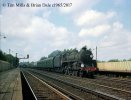
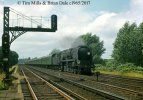
Although we know we can locate Byfleet Junction from the West Weybridge location description anyone else searching for West Weybridge will only come across either a residential area or the name of the National Grid sub-station - not the railway. :)
 
Top