7mm Scale 7 MOK 9F in Spain

Len Cattley

Western Thunderer
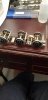
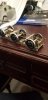
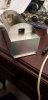
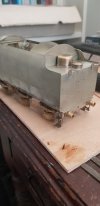
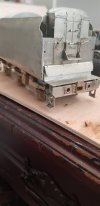
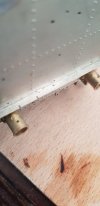
Can't believe it's over 3 months since I last did a post. Christmas over just got new years to do now, doing the dome and the filler pipe but not the water softener as I don't think 92077 had one, if anybody knows different let me know.

Len
 

markjj

Western Thunderer
Can't believe it's over 3 months since I last did a post. Christmas over just got new years to do now, doing the dome and the filler pipe but not the water softener as I don't think 92077 had one, if anybody knows different let me know.

Len
Does this photo of 92077 in 1960 offer you the answer you need Len?
 

Dave Holt

Western Thunderer
Not really an expert, but I would have thought only locos allocated to the Southern Region would have water softener equipment?
Dave.
 

Dave Holt

Western Thunderer
Ooops. Look before you leap!
According to the RCTS book, numbers 92010-4, 92030-3/7, 92043, 92067-76, 92087-96 and 92195/6 were coupled to BR1F tenders modified to have biquette water treatment equipment - a couple in 1956 but most in 1957. The text suggests this record is incomplete and that most, if not all, BR1F tendered 9Fs had this treatment but such mods are not listed in the modifications record list. There's no mention of any other tender type used with 9Fs being so fitted.
Don't know if that helps?
Dave.
 
Last edited:

daifly

Western Thunderer
I've just been reading the same reference material. 92077 spent it's life coupled to BR1C tenders. It is highly unlikely that it would have needed a water-softening tender - the majority of which were for Annesley-based 9Fs - which 92077 never was. All of this can be read and deduced from the RCTS book and the Book of the 9Fs.
Dave
 

markjj

Western Thunderer

Dave Holt

Western Thunderer
Len.
You find the groove of the appropriate length for the handrail being formed. Bend a right-angle near the end of you handrail material, pass the short, bent bit through the inner hole of the selected jig groove, grip the wire to the jig, close to the edge and bend down into the cut-out in the edge of the jig, making sure the two bent down bits are in line with each other.
My experience with 4 mm handrails is that, because the etched holes in the jig are somewhat larger than the wire diameter, the waggle in the hole can lead to the finished handrail not being quite the expected length, so a bit of trial and error might be required. On the other hand, as your wire will be larger in 7 mm, that problem might not occur.
Dave.
 

Len Cattley

Western Thunderer
Sorry chaps I have another question, what wire do I use for the handrails .7mm or .5mm, .5mm seems a bit to small .7mm is ok, but .5mm is used in the ladder. I don't know which one is correct. The instructions doesn't say.

Len
 
Top