Captain Kernow's layouts

cbrailways

Western Thunderer
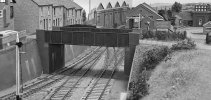
Well, I'm impressed with the perspective transition between the road overbridge and terraced houses and the backscene. I certainly cant see 'the join'. I have a similar transition on my under construction layout that I need to hide or tone down. How did you achieve that CK?
 

Captain Kernow

Western Thunderer
Well, I'm impressed with the perspective transition between the road overbridge and terraced houses and the backscene. I certainly cant see 'the join'. I have a similar transition on my under construction layout that I need to hide or tone down. How did you achieve that CK?
Well, that photo was taken from the other side of the layout, Chris and down low. Up close it's much more obvious!
 

Captain Kernow

Western Thunderer
For the last few months, almost everything on my workbench has been connected with getting 'Callow Lane' ready for the Scalefour Society Jubilee Members Weekend this March.

Prior to the work on the layout, I managed to work on another P4 pannier. I had bought this one from another S4 member, who had started the project but decided to sell it before it was finished.

It features a standard Bachmann 57XX body and an assembled (compensated) Comet chassis with Ultrascale wheels.

The vendor felt that it was a good runner when he last tested it, but subsequently found that it didn't run to well, so very kindly reduced the price and threw in another Mashima motor.

I found that the loco body was not sitting level on the Comet frames, the front being a millimeter or so higher than the back. Some metal needed to be removed from the already-assembled frames, which I carefully did with a small slitting disc, some Xuron snippers and a file.

This was the result:
20251004_110538.jpg.dc60c98e866b1808e53645a67899a82e.jpg

No other work had been done to the body at this stage.

Before anything else could be done, I needed to install a method fixing the chassis to the body. The rear already had a screw thread cut into an existing hole. For the front, I soldered an 8BA nut to an old brass spacer and epoxied it in place:
20251001_160824.jpg.8b931b12fa0f5891d0303c30f5d771c9.jpg

Next, I decided to add more weight to the body:
20251002_155059.jpg.1ea854164cbbac2f64f6930e405e5b45.jpg

I then made up a replacement bottom boiler (Bachmann normally use a cast one as part of the chassis assembly). I also decided to fit a new motor (not the one that the vendor supplier) - a Mashima 1024 - and a High Level gearbox:
20251002_205647.jpg.55111305cd3b632fe0a1142ad646c7f5.jpg

After that, it was a case of fitting the standard additional detail that I like to fit to a Bachmann pannier these days:
20251019_143302.jpg.d0767092eb4f5eff517042781a2c3c03.jpg

20251019_153657.jpg.f203ee3b90bfac87fddfcafc78cf4270.jpg

20251019_153714.jpg.f35a028f3c4fcdd5a2240ea540bf1ab8.jpg

The body was then re-sprayed with Games Workshop Matt Black and number plates applied:
20251030_163003.jpg.9f7bc9b6f0cfaf4c321495ef01c5658d.jpg

Transfers were then applied and the body given a spray of Humbrol Matt Acrylic Varnish. Weathering then followed with enamels and powders:
20251105_153754.jpg.c5650cd83fefe6e9d7c7c2ca58b5d1dc.jpg

7756 was shedded at Gloucester for a while in my chosen period of modelling, so will be able to work a tripper down the main line to Callow Lane or appear on my anticipated Forest of Dean layout in due course.
 

Captain Kernow

Western Thunderer
This week, I weathered another couple of locos, that had been converted to P4 years ago but had not been weathered.

These are a Model Rail Sentinel, which was converted for me by Brian Harrap back in 2011. This loco will be on the roster for the private factory siding:
20260218_135814.jpg.7661e1e836c53d1eec6f06181c73f6c5.jpg

Dating from around the same time is this NCB-liveried Hornby Sentinel diesel. I converted this using a set of experimental Ultrascale wheels. Following the success of this conversion, the wheels became more widely available from Ultrascale. This loco will take it's place on the roster of NCB locos that are 'plated' to run over BR metals into Callow Lane for the purposes of exchange of traffic:
20260218_140111.jpg.ce55bac63b5d6d6b8ebd9af5a1b95f4a.jpg
 

Captain Kernow

Western Thunderer
So here we have another loco passing over the Captain's workbench, but most of this work is something that (by rights, in an ideal world) I shouldn't have had to have done.

This story concerns on of the most excellent Planet Industrials Kerr Stuart 'Victory' 0-6-0Ts. These beefy-looking locos have a definite presence. The P.i. model is very nice and all the examples I have, run very smoothly, making it an ideal shunting loco.

Back when they first came out, I bought a green one to use on 'Bethesda Sidings', my OO 'cameo' layout, featuring a BR goods yard set in rural mid-Wales, into which trains from the (outrageously improbable) Vale of Radnor Light Railway were permitted to run. This contrived situation is merely the latest iteration of my habit of inventing tall tales, to allow me to run my industrials on any of my layouts.

The justification for the appearance of such a large and powerful loco as the Kerr Stuart 'Victory on such an impecunious (don't forget outrageously improbable) light railway in the 1950s and '60s comes in the form of the Association of Independent Light Railways, a kind of 'trade body' for such lines and also a supplier of motive power. No one really knows where the funding for such activities came from and at this remove in time, one can only speculate on the way that the names of certain wealthy railway enthusiasts such as P.B. Greenhouse and Ambrose Cuthbertson keep cropping up in Official Minutes, Company Tax documents and the like....

Anyway, back to reality. I had been eagerly anticipating the release of these locos and was delighted with the running of my green one on my yard of OO test track.

At the next opportunity, I tried it out on the layout itself.

Oh dear.

Back when building Bethesda Sidings, I had been foolish enough to allow myself to be influenced by the apparent merits of OO-SF, (where the narrowing of the gauge to 16.2mm through crossings and check rails improves the appearance of the pointwork - and yes, it does improve the appearance). The OO-SF was limited to one A5 crossover, which I built specially for the layout. The other turnouts had been built for other projects, which had not been proceeded with.

As soon as the loco reached the OO-SF portion of track, it either stopped randomly or slowed right down, clearly not liking the gauge narrowing. Examination of the chassis revealed that although the back-to-backs were OK at 14.5mm, the flanges were 'fatter' than those used by Romford/Markits and most other RTR manufacturers. The inside radius of the flange was binding on the narrower gauge.

Apart from replacing the crossover, the only option was to either not use the loco on the layout or to re-wheel the chassis. I opted for the latter.

I later found out from Accurascale that their Manor was made in the same Chinese factory as the P.i. Kerr Stuart.

I also discovered that OO-SF was originally conceived with Romford wheel standards in mind. No wonder all of my Romford or Markits-fitted locos went through the crossover with no problem. I then recalled that when I bench-tested the crossover, I only used locos fitted with those wheels....
This is the loco concerned:
20260531_104447.jpg.b832a5dff46108f573a494f7b5543977.jpg

I checked through my stock of wheels and found some 16mm Markits drivers, 1/8" axles, crankpins etc. I was fully expecting to have to ream the P.i. brass axle bushes out from 3mm to 1/8", but when I opened the P.i. loco box, I found that I had already bought a set of Markits drivers, plus some 3mm axles a few years ago, when they were still available. So, no reaming out necessary!

Here is the chassis with a replacement wheelset fitted in place:
20260531_111501.jpg.b6f06484aeb81e80b16ba9cf1c4b8d8a.jpg

In doing this conversion, I was guided in no small way by the EMGS Digest sheets covering the conversion of these models to EM gauge.

Having removed both P.i. wheels from the driven axle, together with the nylon drive gear, it was necessary to knurl the Markits axle, prior to press-fitting the gear back onto said axle. The redundant P.i. axle is at the top, the Markits axle below, with some marking tape round one end of the axle, to prevent the very large file that I was about to use, from damaging the bit that went into the brass bush:
20260531_114053.jpg.9692575302d89295b32f4ef710cbb9d4.jpg

20260531_114256.jpg.10ebb22a4b4dc706537da5e40096fd5d.jpg

Here is the re-wheeled chassis:
20260531_115340.jpg.8e6f3351628dca485242e5724e0aebc5.jpg

At this stage, it was necessary to completely remove the chassis block from the loco body, in order to remove the cylinders and connecting rods. This would then enable chassis testing on the layout:
20260603_103655.jpg.068e56881284f430eb22f37c3f81eb2e.jpg

Running wasn't too good, as I had disturbed the angle of some of the 'back wiper' pick-ups during the work. Also, the P.i. wheels had a larger area of metal on the back for the pick-ups to wipe over, as compared with the relatively thin 'strip' of flange rear available on the insulated Markits drivers.

As a result, I epoxied some small bits of copper-clad to the underside of the chassis and fitted additional pick-ups to the front and rear wheel sets:
20260603_103725.jpg.3e9126b493aa15736223d1a964ea5432.jpg

The cylinders and connecting rods were then re-attached and the coupling rods secured in place. Fortunately Planet Industrials used 1mm diameter crank pins, the same as Markits. Further layout testing followed, which was much more satisfactory:
20260603_110551.jpg.d2719de81c22e1feedcafcf07685fca5.jpg

Further testing was done with the loco body back in place. There is quite a lot of additional weight in the loco body, so this improved matters further:
20260603_153933.jpg.9a6ca4e3c3344e10f8c7469b429029f1.jpg

One issue with the use of generic wheels such as the Markits is that the Kerr Stuarts had very noticeable balance weights (as per first image). Given the fact that the spoke count isn't exact, the best I could do as to cut some weights out of thin plasticard:
20260604_164708.jpg.a1c5883c69c26452b3489cc5a72a8597.jpg

Weathering followed (dirty Mig washes, almost completely cleaned off, followed by a coat of matt vernish and powders):
20260607_160501.jpg.ef88690bd07642b02518cae00e38294f.jpg

The loco is now ready for service on the Vale of Radnor Light Railway. Bespoke 'Radnorshire' nameplates from Narrow Planet completed the loco.

In due course, I will be doing something similar to my red Kerr Stuart:
20260612_093727.jpg.6642410aa2647179781f9f97cd440e5f.jpg

But the red one will need the axle bushes reamed out to 1/8" for the Ultrascale P4 wheelsets that I have on order. Nameplates bearing the name 'Mayshill' are ready for it and it will be used on 'Callow Lane'.
 
Top