
You are using an out of date browser. It may not display this or other websites correctly.
You should upgrade or use an alternative browser.
You should upgrade or use an alternative browser.


Quintus
Western Thunderer
As Alan says, inserting a scalpel blade between surround and numberplate and twisting should ping it off.
However!
I ordered new plates from Light railway stores, and asked for the "Dapol" size, which is a bit smaller to fit within the surround.
I have used these for the 14XX and they are a nice close fit within the moulded surround.
The pannier surround seems slightly larger, and there is a slight gap, as can be seen in this photo.
I have now ordered "standard" sized plates, which hopefully will be a better fit.
However!
I ordered new plates from Light railway stores, and asked for the "Dapol" size, which is a bit smaller to fit within the surround.
I have used these for the 14XX and they are a nice close fit within the moulded surround.
The pannier surround seems slightly larger, and there is a slight gap, as can be seen in this photo.
I have now ordered "standard" sized plates, which hopefully will be a better fit.

John Duffy
Western Thunderer
Thanks both - appreciated.
Quintus
Western Thunderer
A shot of half of the layout prior to dismantling today in preparation for the trip to SWAG next Sunday. The baseboard join can just be seen at the bottom right track joint.
The photo unfortunately includes part of my rather untidy work space, if space is an appropriate word, as there is very little of that on the bench.

The photo unfortunately includes part of my rather untidy work space, if space is an appropriate word, as there is very little of that on the bench.
Quintus
Western Thunderer
With most of the steam locos and coal wagons safely boxed up, Bradstock Loco is looking a little deserted.
D3747 now has open season to roam the layout, and is seen here on the coal road.
The loco is from a MOK kit.
The coalies seem to be keeping busy however, no doubt in anticipation of a busy day on Sunday!
D3747 now has open season to roam the layout, and is seen here on the coal road.
The loco is from a MOK kit.
The coalies seem to be keeping busy however, no doubt in anticipation of a busy day on Sunday!
John Duffy
Western Thunderer
Lovely stuff Mike.
Quintus
Western Thunderer
Latest happenings at Bradstock concern my Collett 2251 class, which is being fitted for sound. I've not bought a sound decoder yet, but it's now just about "DCC ready".
The majority of the work is in the tender. Originally I built the loco to pick up via the American system, but now I have two tenders for this loco, the original Collett 3000 gallon, with wheels uninsulated on one side, and a 3500 gallon Churchward tender, which I built later, and had insulated wheels with pick ups on one side only.
I have fitted extra pick ups on the Churchward tender along with all the gubbins required (the white wires will go to the speaker)
My cunning plan now is that should I wish to run the loco on DC, I just swap the tenders.
OK, I know most decoders will now run on DC, but not to my satisfaction.
Here's a photo of the tender chassis.
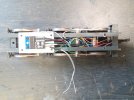
The majority of the work is in the tender. Originally I built the loco to pick up via the American system, but now I have two tenders for this loco, the original Collett 3000 gallon, with wheels uninsulated on one side, and a 3500 gallon Churchward tender, which I built later, and had insulated wheels with pick ups on one side only.
I have fitted extra pick ups on the Churchward tender along with all the gubbins required (the white wires will go to the speaker)
My cunning plan now is that should I wish to run the loco on DC, I just swap the tenders.
OK, I know most decoders will now run on DC, but not to my satisfaction.
Here's a photo of the tender chassis.
Quintus
Western Thunderer
I now have completed the tender mods on the Churchward 3500 tender, which is now ready to plug in a sound decoder (when I decide which one). It is still DC at the moment as I have fitted a blanking plug.

The Collett 3000g tender is purely for DC operation and when coupled to the loco uses the American system

These locos ran with quite a few different tenders, I think I prefer the Churchward one.
The Collett 3000g tender is purely for DC operation and when coupled to the loco uses the American system
These locos ran with quite a few different tenders, I think I prefer the Churchward one.
Quintus
Western Thunderer
For some time now I have been experimenting as to how to replicate that oily sheen patina that a loco that displays when it has had some attention from the cleaners (or more likely some keen enthusiasts).
The results using "Metasheen"metallic floor polish/sealer have been encouraging, a container of which was discovered on a shelf in the garage, left over from tiling our conservatory some years ago.
So far the auto fitted pannier has had the treatment, the fluid was simply brushed on with a small flattie brush, it seems to dry quite quickly, and I think it gives a nice deep oily look to this weathered loco. Of course, only the side tanks, cab side sheets and bunker sides were treated.
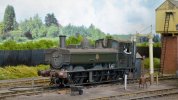

The results using "Metasheen"metallic floor polish/sealer have been encouraging, a container of which was discovered on a shelf in the garage, left over from tiling our conservatory some years ago.
So far the auto fitted pannier has had the treatment, the fluid was simply brushed on with a small flattie brush, it seems to dry quite quickly, and I think it gives a nice deep oily look to this weathered loco. Of course, only the side tanks, cab side sheets and bunker sides were treated.
Last edited:
Quintus
Western Thunderer
Hi Simon,Mike,
there was a recent discussion on RMW about using a microscopic amount of oil, applied with a cotton bud, to achieve a “polished with an oily rag” appearance.
Whilst the description and photos were encouraging, I have not yet been brave enough…
best
Simon
I've not found that particular thread, although the idea had crossed my mind.
I think maybe the oil may attract dust and be a little too mobile (if you see what I mean), so I think I will go along with the floor sealer for now, which seems to give the desired effect (for me, at least).
It seems to give the green a nice deep lustre whilst the previous weathering has toned down the lining.
It seems a little back to front, as usual practice is to finish the loco as pristine and then do the weathering.
Cheers
Mike

simond
Western Thunderer
Hi Mike,Hi Simon,
I've not found that particular thread, although the idea had crossed my mind.
I think maybe the oil may attract dust and be a little too mobile (if you see what I mean), so I think I will go along with the floor sealer for now, which seems to give the desired effect (for me, at least).
It seems to give the green a nice deep lustre whilst the previous weathering has toned down the lining.
It seems a little back to front, as usual practice is to finish the loco as pristine and then do the weathering.
Cheers
Mike
try here. https://www.rmweb.co.uk/blogs/entry/27275-27-shine-on-you-crazy-diamond/page/2/#findComment-83195
atb
Simon

Flaxfield
Western Thunderer
I did comment on an associated thread where the method was used on a Dapol 517.
I think it's a huge mistake to apply oil to a model loco to replicate the attentions of a cleaner. No matter how little is used, it will inevitably find it's way where you least want it. It will certainly get beneath weathering and ruin the finish.
There are other ways to replicate a cleaned loco. I have previously used Autoglym car polish using a small amount on a cotton bud. It gives a nice balanced shine, deepening the colour beneath.
I can't find any photos of locos but here are a couple of coaches so treated.


Rob
I think it's a huge mistake to apply oil to a model loco to replicate the attentions of a cleaner. No matter how little is used, it will inevitably find it's way where you least want it. It will certainly get beneath weathering and ruin the finish.
There are other ways to replicate a cleaned loco. I have previously used Autoglym car polish using a small amount on a cotton bud. It gives a nice balanced shine, deepening the colour beneath.
I can't find any photos of locos but here are a couple of coaches so treated.
Rob
simond
Western Thunderer
Thanks Rob,
I found that thread too
I think your concerns re the oil affecting the underlying plastic are probably well-founded. It might be ok, but…
cheers
Simon
I found that thread too
I think your concerns re the oil affecting the underlying plastic are probably well-founded. It might be ok, but…
cheers
Simon


Quintus
Western Thunderer
That is very effective, and I suppose replicates the real thing, coal dust and oil being being a high percentage of the film that built up, especially on the horizontal surface of the running plate. Oil didn't seem to do the paint job much harm on the real thing either.
However, a mixture of coal dust and oil is probably not the best for preserving paint finishes on models, and I would be reluctant to try it on my locos, especially the etched brass ones, where a major task would ensue in the event of the paint lifting.
I think a very similar effect could be created using more conventional means.
However, a mixture of coal dust and oil is probably not the best for preserving paint finishes on models, and I would be reluctant to try it on my locos, especially the etched brass ones, where a major task would ensue in the event of the paint lifting.
I think a very similar effect could be created using more conventional means.