4mm Llanfair

LarryG

Western Thunderer
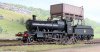
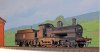
Track-testing was courtesy of a Dapol DCC FITTED GWR 53xx, seen taking water. The Peco buffer stops have had a rod connecting both sides fitted behind the beam and a spare Lanarkshire beam. I've been learning DCC all over again, although there's not a lot to alter on non-sound decoders. Must admit I am missing 'sound' and so I will be thinning out the loco collection. This 2-6-0 will be the mainstay on Llanfair D.
WEB GWR 63XX 1.jpg
 
Last edited:

AJC

Western Thunderer
Why not anglicise?

Lanvuthlin.

After all the Welsh changed Portmadoc! Their right, of course, though some of the rationale is a bit contorted.

Not sure even 14th century clerks made that sort of mangling (and believe me, in the day job I have seen a few). Portmadoc/Porthmadog is one of those - madly ahistorical, but also atypical - aberrations. Denby and Tenby (which have the same Welsh root, Din-bach, the small fort, which would be pronounced rather differently) are more organic examples.

Interestingly (if you're me), Llanfyllin is one of those places with remarkably narrow range of variations. Below is an example from the Melville-Richards place name database - Melville Richards Archive Place-Name Database - Agreement - which shows how little, over about eight centuries, the spelling has been changed - note that the larger variations are routinely by more distant authors.

upload_2021-10-11_15-52-43.png

They'd be little point in picking an Angiclised, wholly alien, spelling in a Cymrophone area with an established written tradition - though the Post Office was prone to that as this resident of Tunbridge/Tonbridge can testify...

Adam
 

Yorkshire Dave

Western Thunderer
Interestingly (if you're me), Llanfyllin is one of those places with remarkably narrow range of variations. Below is an example from the Melville-Richards place name database - Melville Richards Archive Place-Name Database - Agreement - which shows how little, over about eight centuries, the spelling has been changed - note that the larger variations are routinely by more distant authors.

upload_2021-10-11_15-52-43-png.150250


They'd be little point in picking an Angiclised, wholly alien, spelling in a Cymrophone area with an established written tradition - though the Post Office was prone to that as this resident of Tunbridge/Tonbridge can testify...

Hi Adam, interesting stuff and just thinking aloud - is it possible the Form used in the table is partially phonetic based on how the scribes heard them at the time of writing?
 

AJC

Western Thunderer
Hi Adam, interesting stuff and just thinking aloud - is it possible the Form used in the table is partially phonetic based on how the scribes heard them at the time of writing?

Oh, one of those deceptively simple questions.

Yes, it is, though for a variety of reasons, it's less likely in the case of place names than personal names.

Obviously all the sources we have are written and most of those will have originated locally, in the form of petitions or local administrators, secular or religious, many of whom would be Welsh speaking (to an extent, at least - it's usually fairly obvious when a clerk who'd never heard the language turned up or was doing that, but that's bitter experience of wrangling medieval handwriting). In other words most of these spellings will have come from people who knew those places.

One thing to note about that table is that we are also looking at transcription conventions which are derived from transcribing Latin. So many of those 'u's should be 'v's because in most medieval hands they look the same. So do 'n's. In Latin it doesn't much matter, in English it does as it does in Welsh. So William Camden (a Londoner) whose attempt is perhaps most off beam was probably looking at someone's handwriting with a bit of guesswork.

Personal names are a bit different because it's much more likely the clerk will just write what he (as it usually was) hears. My favourite examples include four chaps called Llywelyn (other choices are available on that one even in modern orthography) where the poor clerk was simply guessing and went with Thlewelin/Luellin and others. Some of the French attempts at Welsh names from 15th century Normandy (lists of soldiers names from garrisons there formed a large part of a project I was involved in) are decidedly eccentric but again, the clerk could only write down what he heard.

That's a long way of saying 'yes, but not especially', isn't it?

Adam

 
Last edited:

Focalplane

Western Thunderer
The history of place names interests me too but I would hate to get off topic on such a well managed thread. Suffice it to say that I have been guilty of recording what I heard said in one language, translated into another and then anglicized.

The naming of layouts has always had a sub-theme of the absurd or ridiculous, particularly when, as in Larry’s case the layout is not strictly (100%) based on a real place.
 

Stephen Freeman

Western Thunderer
I think we can take it then that the gentleman concerned was not a Welsh speaker;), I confess I am not (though I do have part of my family tree that was), but I thought everybody knew that, sadly not.
 

LarryG

Western Thunderer
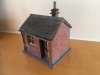
A little stocking filler built tonight for Llanfair yard. It's an Intentio Coal Office. Guttering etc needs to be added. Nameboard and chimney stack come off for painting separately. Same with door and window frames. Everything fitted like a glove...
WEB Coal Office 1.jpg

I have built a few of these in my time but this is the first in 4mm. I won't be using the base.....
WEB Coal Office 2.jpg
 

BrushType4

Western Thunderer
Larry, Looking good! On this building the base was a concrete pad so its perfectly prototypical. Blend in with crud and dirt. The top doesnt need to be glued to this so can be removed if needed.
 

LarryG

Western Thunderer
The base was a good idea, but I don't always use them except for keeping the buildings square during assembly.

Grahams is looking good. The dodgy drainpipe and spillage marks on the brickwork are neat touches.
 

LarryG

Western Thunderer
The new Coal Office has a touch of the Spotty Muldoons as it stands and is in need of more work. But I am happy with the sign board in it's weatherworn GWR dark stone

Mr.Pearce Senior was a proud man. His father had shares in the Great Western and so he kept his coal office spick & span with occasional coats of GWR light stone, his excuse being the damned drivers had no excuse for crashing into his drainpipe! :p

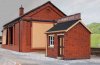
Now that I've done this, I realize the goods sliding shed doors need toning down. Yup, they do slide....

WEB Coal Hut 6.jpg
 
Top