Overseer
Western Thunderer
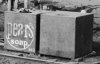
I need help working out what the P visible in this photograph is the beginning of and what the colours are.

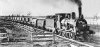
It is a detail of this photograph taken (probably) in 1902 showing a water train at Boort during one of the drought years.

Trying to work out what the P is part of has already proved to be an interesting exercise, to me anyway. My first assumption was impossible because the product hadn't been invented at the time of the photograph.
A bit of background - the square iron tanks visible loaded 3 to a wagon were called 'ship tanks' or just square iron tanks. They were widely used in Australia and many other places for all sorts of purposes. These ones are 400 gallon tanks and are 4 feet x 4 feet x 4 feet, made of riveted wrought iron with a circular cast iron lid in the top. Most were manufactured in London, some in Liverpool and elsewhere. They were invented and patented by Richard Trevithick in 1808 and were the first standardised specially manufactured shipping containers anywhere. They were designed to stack together with no wasted space and to be watertight. By the second half of the 19th century they were all over the place so it made sense for the railways to use them when emergency water trains were needed.


The tanks were filled with whichever product the manufacturer wanted to ship to the colonies, sealed and sent on their way. At their destination the tanks were sold or refilled and sent back. Some manufacturers chose to advertise on the outside of the containers.
My first thought was that the P was the beginning of Persil but that isn't possible as Persil was only invented in 1909 in Germany and was being made in England by 1914. So it couldn't be Persil in 1902.
The second thought is Pears Soap. This is possible and is probably the answer. The problem is that Pears used numerous lettering styles and colours, even though the manager, Thomas Barratt, is now known as the Father of Modern Advertising. He had lots of marketing ideas which still form the basis of the industry but he hadn't come up with the idea of a single brand image being endlessly repeated. From the internet -
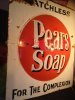

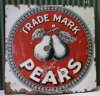

Anyone have any knowledge of Pears advertising before 1902 to provide guidance? Would it be capital letters or just capitalised first letters? The P visible in the first photo appears too big to fit Soap underneath, but maybe not as the print ads have all sorts of layouts.
Any ideas? Any other suggestions?
It is a detail of this photograph taken (probably) in 1902 showing a water train at Boort during one of the drought years.
Trying to work out what the P is part of has already proved to be an interesting exercise, to me anyway. My first assumption was impossible because the product hadn't been invented at the time of the photograph.
A bit of background - the square iron tanks visible loaded 3 to a wagon were called 'ship tanks' or just square iron tanks. They were widely used in Australia and many other places for all sorts of purposes. These ones are 400 gallon tanks and are 4 feet x 4 feet x 4 feet, made of riveted wrought iron with a circular cast iron lid in the top. Most were manufactured in London, some in Liverpool and elsewhere. They were invented and patented by Richard Trevithick in 1808 and were the first standardised specially manufactured shipping containers anywhere. They were designed to stack together with no wasted space and to be watertight. By the second half of the 19th century they were all over the place so it made sense for the railways to use them when emergency water trains were needed.
The tanks were filled with whichever product the manufacturer wanted to ship to the colonies, sealed and sent on their way. At their destination the tanks were sold or refilled and sent back. Some manufacturers chose to advertise on the outside of the containers.
My first thought was that the P was the beginning of Persil but that isn't possible as Persil was only invented in 1909 in Germany and was being made in England by 1914. So it couldn't be Persil in 1902.
The second thought is Pears Soap. This is possible and is probably the answer. The problem is that Pears used numerous lettering styles and colours, even though the manager, Thomas Barratt, is now known as the Father of Modern Advertising. He had lots of marketing ideas which still form the basis of the industry but he hadn't come up with the idea of a single brand image being endlessly repeated. From the internet -
Anyone have any knowledge of Pears advertising before 1902 to provide guidance? Would it be capital letters or just capitalised first letters? The P visible in the first photo appears too big to fit Soap underneath, but maybe not as the print ads have all sorts of layouts.
Any ideas? Any other suggestions?


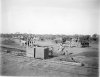
 . What can you tell us about the (non-railway) wagon and the use of the boxes in that picture?
 I think it was someones idea of a roller for flattening scrub while clearing land and the tanks are to hold the ballast to provide weight. Not sure if it was pulled by bullocks, horses, traction engine or tractor. Most rollers used to clear the Mallee were old boilers with an axle put through the middle. If it was a wagon it would not have been too successful with the small wheel diameter, horse drawn wagons used on the sandy soil in this area had wide tyres but larger diameter wheels to roll over the sand instead of digging in.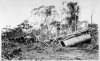


 .
.