Stevers
Western Thunderer
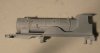
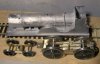
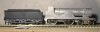
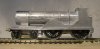
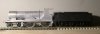
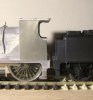
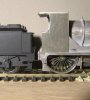
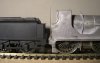
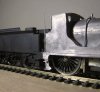
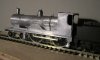
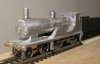
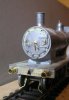
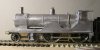
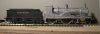
 This is a Wills T9 built by a friend's father using a large tinman's soldering iron and gas ring using a 'low melt' solder that doesn't respond to boiling water. I am assured that the father wasn't technical, but it is really quite neatly joined together using Rose's Metal or something with similar properties. I use a 75W Weller on a lighting dimmer switch, and it does respond to a turned up soldering iron, but the melted solder doesn't flow well so really needs removing for any repairs.
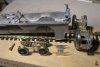
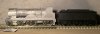
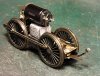
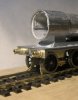
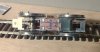
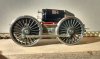
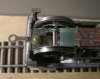
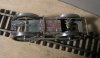
Found on the floor behind a book case it has clearly suffered at the school of hard knocks. Not all the bits were fully attached, but all parts are present. At the rear there was significant impact damage on one corner, and the fit of the back of the cab floor and drawbeam left much to be desired making the model width a trim 32-31-33 from front to its out of square rear. The SEF T9 chassis are out of stock at Squires, but my friend remembered that I happened to have a SEF chassis that wouldn't fit my Hornby T9 (wrong wheelbase). This chassis kit was part built in EM with twin beam compensation and was complete except for the lovely bogie which I was able to use. I ended up using a Perseverance chassis for my Hornby T9 conversion and that left me with the Persy bogie left over. Initially I offered to convert the SEF chassis and build the Persy bogie to 00 gauge, but this has escalated to me attempting the whole repair and upgrade. Also supplied is a Hornby six wheel tender in bare black plastic.
The completed model is to be painted in Southern wartime livery, numbered as 311 and is required by Christmas - no pressure then!